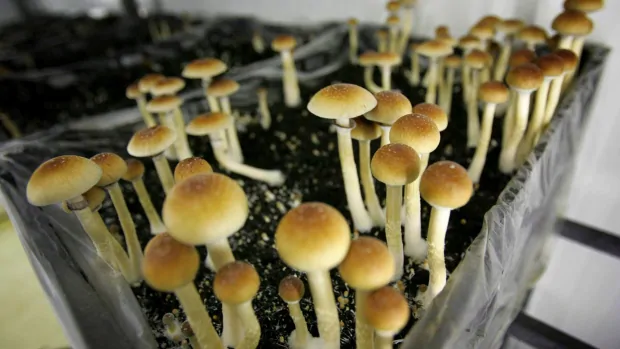
Growing mushrooms is relatively easy and can be done in a few simple steps. Firstly, choose a suitable growing substrate, such as straw, sawdust, or compost. The substrate should be sterilized to eliminate any competing bacteria and fungi that could negatively impact the growth of your mushrooms. After sterilization, inoculate the substrate with mushroom spores, spores, or spores with mycelium. This is done to introduce the fungus to the growing environment and encourage the development of a healthy mycelial network. Once the inoculated substrate is incubated, it will be colonized by the fungus and ready for fruiting. The conditions for fruiting, such as temperature and humidity, will depend on the species of mushroom you are growing. To ensure a successful crop, it is important to monitor these conditions carefully and make any necessary adjustments. Overall, growing mushrooms can be a fun and rewarding hobby that yields delicious and nutritious produce.
Mushroom Contamination
Contamination is a major challenge for mushroom growers as it can ruin a whole crop and is often difficult to prevent. Contaminants, such as bacteria, molds, and other fungi, can easily enter the growing environment and outcompete the desired mushroom strain. Contamination can occur at any stage of the growing process, from sterilization to fruiting, and can have a variety of causes such as poor sanitation, contaminated equipment, and air-borne spores. To minimize the risk of contamination, growers should take measures such as using sterile equipment, maintaining a clean growing environment, and using proper sterilization techniques. Even with the best precautions, however, contamination can still occur, so it is important for growers to be vigilant and aware of any signs of contamination, such as off-odors or discoloration, and take prompt action to address the issue. In short, contamination is a constant threat to mushroom growers and requires constant vigilance and attention to minimize its impact.
Mushroom Growing Period
Growing mushrooms is a fun and rewarding hobby that can yield delicious and nutritious produce! The time it takes to grow a crop of mushrooms can vary, but on average, it’s around 4-12 weeks. This includes a cozy 2-4 week incubation period where the mycelium gets to know its new home and starts to grow, followed by a fruiting period of 2-6 weeks. The length of the fruiting period depends on the species of mushroom you’re growing and the conditions you provide, so it’s always a bit of a surprise! But don’t worry, with a little patience, attention to detail, and love, you’ll be enjoying your homegrown mushrooms in no time.
The Type of mushroom you can grow
The type of mushroom you choose to grow will depend on a few things, like your climate and personal taste preferences. If you live in a warm and humid environment, species like Golden mushrooms or Mazatapec mushrooms might be a great choice. If you live in a cooler climate, species like reishi or maitake might be better suited. If you’re new to mushroom growing and just want to try it out, you might consider starting with a commonly grown species like button or Melmac mushroom, which are easy to grow and have a mild flavor. Or, if you’re feeling adventurous, why not try growing a unique species like Penis Envy? The possibilities are endless! Just remember, no matter what species you choose, with a little patience and care, you’ll be able to grow psychedelic mushrooms at home.
First of all, this is strictly for knowledge purposes, you may not do it right, so in some sense, I am afraid. Because these are not just any mushrooms, we are talking about psychedelics, possibly the strongest of them all
Necessary Equipment
Growing mushroom is necessarily not a difficult thing to do. But if you have the right equipment/items then you will grow some fine magic mushroom
- Substrate: such as rye grain, straw, or sawdust.
- Spores or mycelium of the desired species of magic mushroom.
- Sterilization equipment: such as pressure cooker or autoclave.
- Containers: such as canning jars or plastic bags.
- Humidifier: such as a cool mist humidifier or a humidity tent.
- Thermometer: to monitor the temperature of the growing environment.
- Lighting: to provide the mushrooms with a source of light.
- Scalpel or sterilized blade: for transferring spores of mycelium.
- Sterilized gloves: to minimize the risk of contamination.
Preparation Phase of magic mushroom
Growing psychedelic mushrooms is an exciting and rewarding adventure! In order to get started, you’ll need to follow a few simple steps during the preparation phase. Here’s what you’ll need to do:
- Choose your species: Pick a species of mushroom that is well-suited to your climate and growing conditions.
- Get your mycelium or spores: Acquire fragments of mycelium or fragments of the desired species of mushroom from a reputable supplier, or by cloning a wild mushroom.
- Make your substrate: Choose a substrate like rye grain, straw, or sawdust, and prepare it according to the instructions provided.
- Sterilize with care: Sterilize the substrate using a pressure cooker or autoclave to eliminate any unwanted bacteria or fungus.
- Add your mycelium or fragments: Transfer the mycelium or fragments to the sterilized substrate with a sterilized blade or scalpel.
- Incubate: Place the inoculated substrate in a warm, dark place for 2-4 weeks so the mycelium can grow and colonize the substrate.
- Set up your fruiting environment: Create a fruiting environment with the right source of light, temperature, and humidity.
The incubation phase
- Monitoring temperature and humidity: Keep the temperature of the growing environment within the range recommended for the species of mushroom being grown, and maintain an appropriate level of humidity.
- Observing for colonization: Observe the inoculated substrate for signs of colonization by the mycelium. This may take 2-4 weeks, depending on the species of mushroom being grown.
- Controlling contaminants: Monitor the inoculated substrate for signs of contamination and take action to control or eliminate any contaminants that may appear.
- Turning the substrate: Turn the inoculated substrate periodically to ensure even colonization and to promote the growth of the mycelium.
- Adding air exchange: Provide air exchange by opening the containers or bags containing the inoculated substrate, or by using a fan to circulate air in the growing environment.
- Maintaining consistent conditions: Maintain consistent conditions in the growing environment to support the growth of the mycelium and prevent contamination.
- Harvesting: When the mycelium has fully colonized the substrate, the incubation phase is complete and the mushrooms are ready to be harvested.
The Colonization Phase
The colonization phase in growing psychedelic mushrooms involves the growth and spread of the mycelium within the inoculated substrate. During this phase, the following steps should be taken:
- Monitoring temperature and humidity: Maintain an optimal temperature and humidity level within the growing environment to support the growth of the mycelium.
- Observing for colonization: Regularly check the inoculated substrate for signs of colonization by the mycelium, which may take 2-4 weeks, depending on the species of mushroom being grown.
- Controlling contaminants: Watch for any signs of contamination, and take steps to control or eliminate any contaminants that may appear.
- Turning the substrate: Turn the inoculated substrate periodically to ensure even colonization and to promote the growth of the mycelium.
- Adding air exchange: Provide air exchange by opening the containers or bags containing the inoculated substrate, or by using a fan to circulate air in the growing environment.
- Maintaining consistent conditions: Maintain consistent conditions in the growing environment to support the growth of the mycelium and prevent contamination.
- Harvesting: When the mycelium has fully colonized the substrate, the colonization phase is complete and the mushrooms are ready to be harvested.
The birthing phase in growing psychedelic mushrooms involves the transfer of the colonized substrate, commonly known as “cakes,” from the container in which they were incubated to the fruiting chamber. This phase involves the following steps:
- Preparing the fruiting chamber: Set up a fruiting chamber with the proper conditions for the species of mushroom being grown, including temperature, humidity, light, and air exchange.
- Saturating the cakes: Saturate the cakes with water by either soaking them in water or misting them with a spray bottle. This step is important because it provides the moisture that the mushrooms will need to grow and fruit.
- Birthing the cakes: Remove the cakes from the container and place them in the fruiting chamber, either on a tray or suspended in the air.
- Adding air exchange: Provide air exchange by opening the lid of the fruiting chamber, or by using a fan to circulate air.
- Monitoring conditions: Monitor the conditions in the fruiting chamber, including temperature, humidity, light, and air exchange, and adjust as needed to ensure optimal growth and fruiting of the mushrooms.
- Harvesting: Once the mushrooms have formed, they are ready to be harvested.
The fruiting Phase
The fruiting phase of mushroom growth is the stage in which the mushroom produces its reproductive structures, the mushrooms themselves. This phase typically follows the mycelium growth phase, during which the fungus colonizes the substrate, and precedes the post-fruiting phase, during which the fungus prepares for another cycle of growth. The length of the fruiting phase can vary depending on the species and growing conditions, but it typically lasts several days to several weeks.
The best fruiting conditions
- Optimal temperature range: Generally between 60-70°F.
- High humidity: To maintain a moist growing environment for the mushrooms.
- Proper air exchange: To provide fresh air and CO2 release for the mushrooms.
- Appropriate light: Limited light is needed for the fruiting stage, but too much light can be harmful.
- Proper substrate: A mixture of organic material, such as compost or sawdust, that provides the necessary nutrients for the mushrooms.
What light helps to grow shrooms
Nothing extravagant has to be done or purchased. The easiest choice is diffused light from a window, but fluorescent lights and LEDs that replicate the sun’s spectrum will also work. You may use a T5 or T8 fluorescent bulb if you cultivate cannabis and have one lying around. The box just needs to be warmed by the light.
Some mushroom producers fervently adhere to a 12-hour light/12-hour dark cycle, which may be managed with an outlet timer. However, based on our observations, we believe that controlling temperature swings is more crucial.
Consistent temperature changes lead to condensation and humidity. Cups won’t need to be wetted directly; only spray the interior of the box before putting the cups inside. The evaporation and rehydration of the substrate during the day and night cycles accelerate the development of fruits.
Conclusion
Guys, we are not encouraging you to start growing your own mushroom. Though it is decriminalized in lot of states in Canada but growing itself can be tricky. So, growhouse would suggest until you have full knowledge about Psychedelic mushroom, it is better to order it online and Growhouse can provide you with some of the best mushroom.
If you are starting with psychedelic, we would suggest go with micro-dosing. Micro-dosing is a low amount of shrooms that won’t alternate your reality but will give you a smooth kick.